5 SEO Tips That Actually Move the Needle
Before writing the tips themselves, it's worth grounding the goal. SEO isn't about tricks or chasing Google updates—it's about making your site the clearest, most useful answer to a real human question, then removing friction so search engines can recognize that clarity.
1. Start With Search Intent, Not Keywords
One of the biggest SEO mistakes is treating keywords as the goal rather than a signal. A keyword is simply a proxy for intent. If you don't understand why someone is searching, ranking won't translate into traffic that converts.
Search intent generally falls into four buckets:
- Informational — "how to fix brown spots on lawn" (they want to learn)
- Navigational — "TruGreen login" (they want a specific site)
- Commercial — "best lawn care company near me" (they're comparing options)
- Transactional — "lawn mowing service quote" (they're ready to buy)
Most landscaping businesses chase transactional keywords because they seem closest to revenue. But informational and commercial queries often have far less competition and build the trust that leads to conversions down the road. A homeowner who finds your blog post about spring lawn prep in March is very likely to call you for service in April.
The key is matching your page format to the intent. Informational searches need in-depth guides, not a sales page. Commercial searches need comparison content and social proof, not a blog tutorial. Transactional searches need a clear service page with pricing, reviews, and a fast way to request a quote.
Actionable takeaway: Before you create any page, Google the target keyword yourself. Look at what's ranking on page one. If the top results are all blog posts, don't build a service page—and vice versa. Match the format to what Google is already rewarding.
2. Create One Truly Excellent Page Instead of Five Mediocre Ones
SEO rewards depth and authority far more than volume. Publishing multiple overlapping articles on similar topics often cannibalizes your own rankings and dilutes topical authority. If you have three blog posts about "spring lawn care tips," "how to prepare your lawn for spring," and "spring lawn maintenance guide," Google doesn't know which one to rank—so it may not rank any of them well.
Instead, consolidate those into a single, comprehensive resource that covers every angle of the topic. This page becomes your "pillar" content—the definitive piece that earns links, ranks for dozens of related keywords, and establishes you as the authority on that subject.
What makes a page "excellent" in Google's eyes:
➔ Comprehensive coverage: Answers the main question and the follow-up questions a reader would naturally have.
➔ Original perspective: Includes real examples, original data, or unique insights—not just a rewrite of what's already ranking.
➔ Visual support: Uses images, diagrams, or videos to break up text and explain complex ideas.
➔ Clear structure: Organized with logical headings so readers (and search engines) can scan and find what they need.
➔ Freshness: Updated regularly with current information, not published once and forgotten.
Actionable takeaway: Audit your existing content. Look for multiple pages targeting similar keywords and merge them into one strong piece. Redirect the old URLs to the consolidated page so you don't lose any existing link equity.
3. Optimize for Humans First, Then Search Engines
Modern SEO is largely a byproduct of good user experience. Google tracks engagement signals—time on page, scroll depth, bounce rate, and pogo-sticking (when users quickly return to search results after clicking your link). These aren't direct ranking factors in the traditional sense, but they tell Google whether your page actually satisfied the searcher's need.
For landscaping websites, this means thinking about what a potential customer actually experiences when they land on your page. Here's what matters most:
➔ Page speed: If your site takes more than 3 seconds to load, over half your visitors will leave before they see anything. Compress images, use modern formats like WebP, and minimize unnecessary scripts.
➔ Mobile experience: Over 60% of local searches happen on phones. Your site must be fully functional and easy to navigate on a small screen—not just a shrunken version of your desktop site.
➔ Above-the-fold clarity: The first thing a visitor sees should immediately answer "What does this company do?" and "How do I contact them?" Don't bury your phone number or contact form.
➔ Readable formatting: Short paragraphs, descriptive subheadings, bullet points, and white space. Walls of text drive people away.
➔ Trust signals: Reviews, certifications, insurance info, before-and-after photos, and real team photos build confidence before a visitor ever picks up the phone.
Think of it this way: Google's job is to recommend the best result. If people consistently click your listing and stay on your page, Google keeps recommending you. If they bounce back, Google stops. Every on-page decision should be made with the visitor's experience in mind first and keywords second.
Actionable takeaway: Run your site through Google PageSpeed Insights. Fix the top three issues it flags. Then, open your homepage on your phone and ask: can someone figure out what you do and how to reach you within 5 seconds?
4. Build Internal Links With Intention
Internal linking is one of the most underutilized SEO levers—and one of the safest. Unlike backlinks from other sites (which you can't fully control), internal links are 100% in your hands. They help search engines understand which pages matter most, how topics relate to each other, and where authority should flow across your site.
A common mistake is thinking of internal links as just navigation. They're actually a strategic tool. Here's how to use them effectively:
➔ Link from high-authority pages to important pages: Your homepage likely has the most authority. Make sure it links to your core service pages, not just a generic "Services" dropdown.
➔ Use descriptive anchor text: Instead of "click here" or "learn more," use text like "our lawn care services in Boston" or "how we handle spring cleanups." This tells Google what the linked page is about.
➔ Create topic clusters: Group related content together. If you have a main page about "Lawn Care Services," link it to supporting blog posts about mowing schedules, fertilization timing, and weed control. Those posts should link back to the main service page.
➔ Link from blog posts to service pages: Every blog post is an opportunity to guide a reader toward hiring you. Naturally weave in links to relevant service pages where it makes sense.
➔ Fix orphan pages: Any page on your site that has zero internal links pointing to it is essentially invisible to Google. Audit for these and add relevant links.
Actionable takeaway: Pick your top 5 most important pages (usually your highest-revenue services). Then go through your existing blog posts and add 2–3 internal links from relevant posts to each of those pages. This alone can move rankings within weeks.
5. Technical SEO: Fix the Bottlenecks, Don't Chase Perfection
You don't need a flawless technical setup to rank—but you do need to eliminate obvious friction. Technical SEO is about making sure search engines can find, crawl, and index your pages without issues. Think of it as the foundation: nobody notices a solid foundation, but everyone notices a cracked one.
The technical issues that actually impact rankings for most small business websites:
➔ Broken links and 404 errors: These waste crawl budget and frustrate visitors. Use a free tool like Screaming Frog to find and fix them.
➔ Missing or duplicate title tags: Every page needs a unique, descriptive title tag that includes your target keyword and location. "Home" or "Services" as a title tag is a missed opportunity.
➔ No SSL certificate: If your URL starts with "http" instead of "https," Google penalizes you and browsers show a "Not Secure" warning. This is a non-negotiable fix.
➔ Missing meta descriptions: While not a direct ranking factor, meta descriptions control what people see in search results. A compelling description increases your click-through rate, which does affect rankings.
➔ Slow page speed: Large uncompressed images are the #1 culprit for landscaping websites. A single 5MB hero photo can add seconds to your load time. Compress images and use lazy loading.
➔ No sitemap or robots.txt: A sitemap tells Google which pages exist. Robots.txt tells it which pages to skip. Both help search engines crawl your site more efficiently.
➔ Missing schema markup: Local business schema helps Google understand your business name, address, phone number, service area, and hours. This can improve your appearance in local search results and map packs.
The goal here isn't to score a perfect 100 on every audit tool. It's to fix the issues that are actively hurting your visibility. Start with the biggest bottlenecks, measure the impact, and move to the next one.
Actionable takeaway: Run a free site audit through Google Search Console. Look at the "Coverage" and "Core Web Vitals" reports first. Fix any errors flagged there before worrying about anything else.
Bonus: Local SEO Is Your Secret Weapon
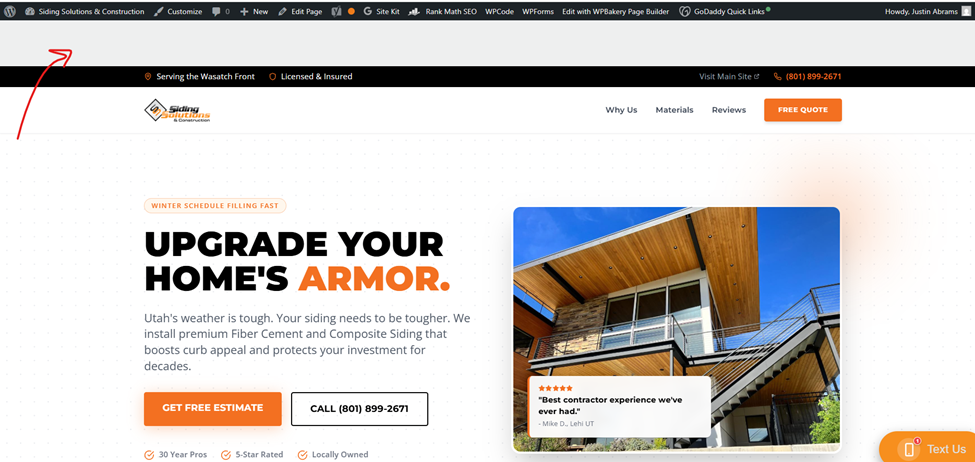
For landscaping businesses, local SEO deserves special attention because almost every customer you'll ever work with is within a specific geographic radius. General SEO tips are valuable, but they don't account for the unique dynamics of local search—particularly the Google Map Pack, which dominates above organic results for "near me" queries.
The essentials of local SEO for landscaping companies:
➔ Claim and optimize your Google Business Profile: Fill out every field—services, service area, hours, photos, and business description. Post updates weekly. This is the single most impactful thing you can do for local visibility.
➔ Build consistent citations: Your business name, address, and phone number (NAP) should be identical across every directory—Yelp, Angi, BBB, Facebook, and industry-specific sites. Inconsistencies confuse Google.
➔ Generate reviews consistently: Not just on Google—though that's the priority. A steady stream of recent, authentic reviews signals to Google that your business is active and trusted. Ask every satisfied customer. Make it easy with a direct review link.
➔ Create location-specific pages: If you serve multiple towns, create a dedicated page for each one. Don't just swap the city name—include local details, mention neighborhoods, and reference local landmarks. This helps you rank in each specific area.
➔ Embed a Google Map: On your contact page and location pages, embed a Google Map showing your service area. This reinforces your geographic relevance to search engines.
Actionable takeaway: Log into your Google Business Profile today. Add any missing photos (aim for 20+), update your service list, and make sure your hours are current. Then send a review request to your last 10 happy customers.
Final Thoughts: SEO Is a Long Game
SEO works best when treated as an asset, not a campaign. Unlike paid ads where results stop the moment you stop spending, SEO compounds over time. A blog post you write today can bring in leads for years. A well-optimized service page can rank for dozens of related keywords without any ongoing ad spend.
The highest-performing sites are built around clear intent, high-quality evergreen content, strong internal structure, and consistent incremental improvement. You don't need to do everything at once. Pick one tip from this list, implement it well, measure the results over 60–90 days, then move to the next.
The goal isn't to game search engines—it's to become the obvious answer when a homeowner in your area searches for help with their property.
Want to See Where Your SEO Stands?
Find out how your website ranks against the competition. Get a free marketing audit and discover the quick wins that will bring more leads to your landscaping business.
Check Your SEO Score Now